The history of art has been to a large degree the history of social status. Aristocracy wanted portraits. The middle class wanted landscapes. The aristocracy had first dibs on the best artists, but once the middle class started making money there was so much demand that many painters could make a living without ever painting what anyone would consider a masterpiece.
The reason most people want to be actors is not fame or money, but the chance to inhabit other lives. Actors are particularly likely to fantasize about this because they do it so often in their work, and also because they often feel like frauds: they know they got where they are not by being someone but by pretending to be someone. It’s natural in such circumstances to daydream about doing it for real. If you could actually change your life by changing your appearance, why wouldn’t you?
And yet I’ve never heard of an actor who has done this and succeeded. Successful actors have changed their appearance radically, but only in service of existing personae: Marilyn Monroe was, after all, still Marilyn Monroe as a blonde. When I see actors trying to transform themselves into new people — when I see John Travolta going from fat back to thin, or Madonna trying to look like Brit
The pose of an actor seems to be, I am going to act for all I am worth, and if you are not satisfied with the result, that is your fault. And this attitude is of course precisely the same as that of a man who is throwing a brick at my head. If I fail to dodge the brick, he will take it as proof that he has a right to throw bricks at my head. The actor’s attitude is not one of humility; it is one of pride, arrogance and aggressiveness.
I have known many actors; not one of them ever succeeded in giving me any pleasure whatever by acting. Not one ever succeeded in doing anything but annoy me by his acting.
I have known some very good writers who were also actors–Joseph Conrad and Henry James come immediately to mind–and they were very good writers in spite of their being actors, not because they were actors.
The method actors in Hollywood are famous for being able to cry on demand. But that’s just the beginning of their talent. They can also be on time, sober and friendly to directors, which is quite a lot more than most people can do on demand.
All professions have their secret techniques. To be a chef, you don’t only need to be able to cook; you also need to be able to work 120 hours per week, with no weekends off and occasional scaldings from hot oil. If you can’t do those things, you won’t last long as a chef. By the same token, if you want to be an actor in Hollywood, you have to be able to make directors love you. Which means being able to act like someone who loves them back. It’s not just about acting; it’s about being an actor.
The line between acting and lying is a fine one. It’s a line actors cross frequently, because the story they are telling is not their own, but someone else’s. This is especially true of the theater, where an actor has to embody another human being both physically and psychologically.
In order to make this convincing, they must have an intellectual understanding of the character they are portraying, but also a deeper connection. The actor must be able to describe what their character wants, how they feel about themselves and others, and why they behave in certain ways. These attributes all help them to inhabit the role. But it doesn’t always work that way. Sometimes actors are unable to relate to the characters they portray, or don’t like them very much; in these instances it can be difficult for them to inhabit the role convincingly.
I’ve always been interested in the relationship between acting and lying because I’ve been told that I’m a good liar by some people who know me well (and not so good by others). As a child I had no problem with this characterization; later on I was more ambivalent about it.
In my previous book [1] I discussed this question from an economic perspective: why do people lie? What do we stand to gain from
The use of models in pictures is a way of using the technical qualities of images to suggest something of the character and inner life of the human subject. In this respect, photography may be said to have developed a language of posing which, through long usage and convention, has acquired definite associations. These conventions are so familiar that one can describe some of their essential features briefly. The intent here is not to be exhaustive but rather to give a picture, as it were, of the most common types or poses.
I’ve been shooting video on the iPhone for several years now, and I’m often asked for advice about how to improve the quality of the video.
The camera is pretty small and can only handle so much. Its lens has a fixed focus and a fixed aperture. It doesn’t have an external microphone jack. And it doesn’t shoot well in low light.
What you need to know is that those limitations don’t really matter as much as you think they do.
Most of what you see on TV or in movies doesn’t look very realistic, either. But it still looks good.
Most of the time, when you’re acting on screen, you’re acting in front of a blue screen anyway, so your reality is already being reconstructed for you by someone else. If you don’t believe me, take a look at one of those reality shows some time.
The point is that acting for the screen isn’t about reality. It’s about real emotion under imaginary circumstances. The camera will take care of itself if you’ll just learn to inhabit your character and trust yourself to be genuine.
I’ve been taking photographs for about eight years, and in that time I’ve taken maybe a thousand photos of people. I’ve always been interested in how everyone has different ways of posing for a photo, and how this causes the same person to look completely different depending on the pose they use.
The usual way to pose is to do something that shows off your most attractive feature. Usually this means showing off your eyes and face, which is why people frown; to avoid squinting against the light, which makes their eyes look small.
A lot of people have learned to pose with their head tilted slightly to one side. This is a good trick because it makes the person look more attractive than they are in real life; their jaw looks smaller and their neck looks longer. The downside is that it tends to make them look stupid or submissive.
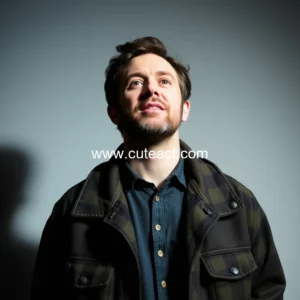
There’s a third kind of pose that I call “the actor’s pose.” The idea is not to show off any particular feature, but to create an expressive face that also looks natural. This can be done by making a concentrated expression; for example, looking at something intensely or trying to remember something. It can also be done by looking like you’re about to say something interesting.
Another way is by using